A neighbor died. She lived in my apartment building and was ailing. Her death was not unexpected, and though sad, it is remarkable the way in which Azerbaijanis, following their rich traditions and culture, honor--indeed celebrate--the passing of life from this world into the next, as those at the celebration explained to me. She was the wife of a dear old gentleman who works occasionally at the institute, and who every time he sees me greets me in German. He knows a few phrases, more than he knows in English. Besides, I think he thinks I am German! Since last summer, all of us in the building knew it was only time before his wife would die. She passed away late last Friday afternoon around 6 PM, and since it was close to sundown, she was not buried until Saturday. According to Muslim tradition, a body should be buried the same day, unless it is too late in the day--then the body is buried the next day. Only males accompany the body to the cemetery for burial, female relatives gather at the home of the deceased.
On the third day after the death, known as üç--3, for the third day, the funeral celebration takes place. In recent years, this has become quite elaborate in Azerbaijan. Knowing she was going to die, and having recently been to a funeral celebration herself, where she could not fully partake in the frenzied mourning, crying, and wailing that women mourners do, she made it known to her family members, that she did not want the typical "crying ceremony". Traditionally, men and women gather separately, each with a mollah to conduct the crying ceremonies--a male mollah for male mourners and a female mollah for the women. During the ceremonies passages from the Qoran are recited and sung by the presiding mollah, gradually increasing in frenzy, until all present are fully engulfed in mourning. Because these ceremonies are conducted in the deceased's home or in an event tent set up outside the home, there is often not enough room for all mourners at once. Consequently, mourners continue to rotate through, throughout the day, with the mollah remaining and conducting the ceremonies until all mourners have been accommodated.
The third day funeral celebration always consists of a meal of typical Azerbaijani dishes for all mourners. Since my neighbor did not wish to have the crying ceremony conducted, all those who attended the third day funeral celebration skipped that part and gathered straight away for the meal in one of the event tents that had been set up in the playground/parking area directly behind our apartment building. The entire day a catering service supplied on-going food service. Together with my neighbor and good friend Gulnaz, I entered the meal tent set up for the women. Male mourners had their own tent. At the head table sat the female relatives of the deceased and the female mollah. The tent easily held over 100, and once all the tables were filled, we were served tea and sweets (this typically starts a meal), then plates of fresh herbs, pickled red and white cabbages, and a stew of potatoes and beef, copious amounts of fresh white bread, followed by more tea and sweets. Roaming through the tent was a woman with a special decanter, sprinkling those who wished with special water for washing the hands and face. Once most were finished eating, the mollah began singing a few appropriate phrases and the female mourners prayed, giving thanks for the meal by raising their open hands sky-ward and then brushing their faces with the palms of their hands. We paid our respects to the head table by wishing the daughter of the deceased: Allah rəhmət eləsin...basically, rest in peace. We were in the event tent for the meal for about an hour, and as we were leaving, the caterers were hurriedly setting up for more mourners to attend. This went on all day long, as groups of mourners filed through the event tents to partake of the funeral meal. The mollah and family members remain throughout.

Funeral event tents for the funeral celebration meal, set up on the playground/parking area behind my building. White tent for female mourners, blue for male mourners.
Catering trucks arrive to dismantle the tents used for preparing the funeral meals and for the guests partaking.
The elaborately celebrated funeral meal, complete with fully catered event tents, is quite costly. And this woman was prominently known throughout the town, so many hundreds gathered throughout the day to eat the funeral meal, as part of the third day funeral celebration. Consequently, most who attend pay for their meals, whatever they can afford to pay, and a booklet is passed around for those in attendance to record how much they have donated to pay for their funeral meal. For the catering businesses in town it is big business, second only to wedding celebrations, which are even more elaborately and more expensively attended.
Common in Azerbaijan are the yearly celebrations marking the anniversary of the passing of a loved one and family member. For such occasions families gather every year, for many years, to celebrate with each other and with the traditional Azerbaijani foods. I think it is a memorable tradition, and is a way of continuously honoring the one who has passed away and offering on-going support to the close surviving family members. Well, I will hold onto these thoughts on Feb. 20th--that will mark the 3rd year anniversary of the passing of my dear Bill. <3
On Sunday I had a nice hike up to the Mingachevir Reservoir...and was surprised at the local refugee woman, who was shooing her cows to the edge of the reservoir, so they could get a drink. It was an interesting sight.


 The Head Statue in Old Town


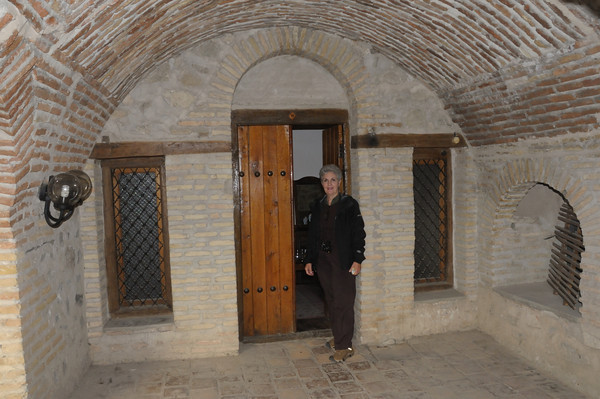


 With an ethnic minority Georgian population, Qax has a Georgian Orthodox Church...


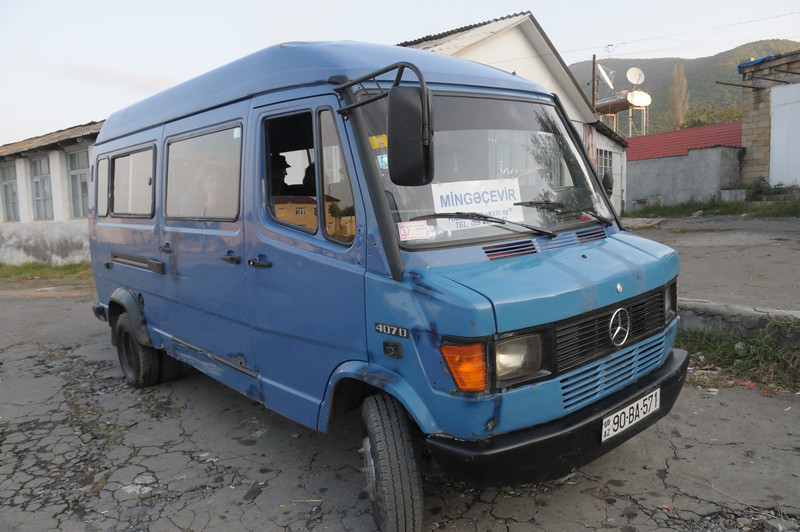
 Ancient form of road travel (donkey cart) and today's marshrutka, the form of travel we took to head back to Mingachevir...


 Pomegranates...


